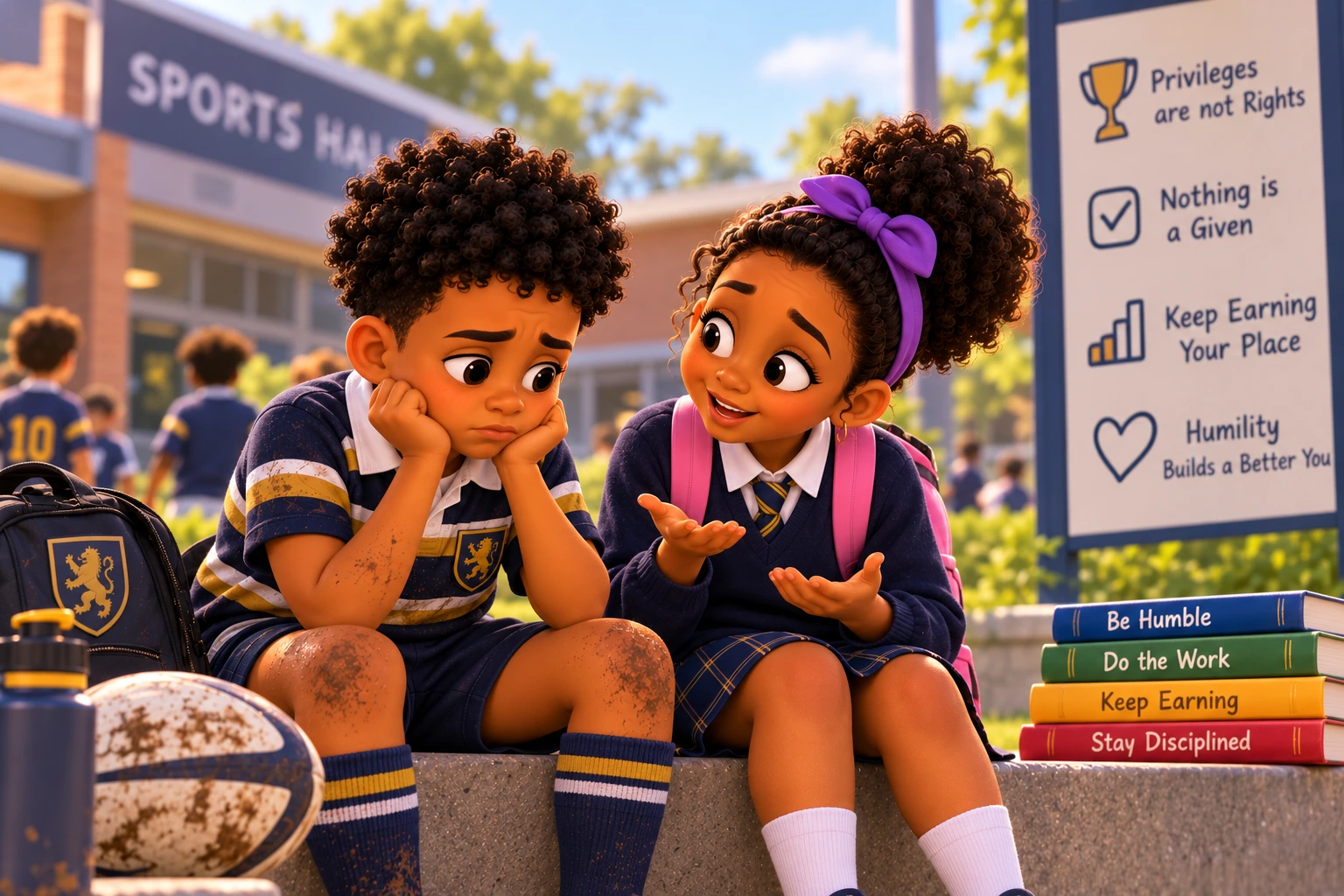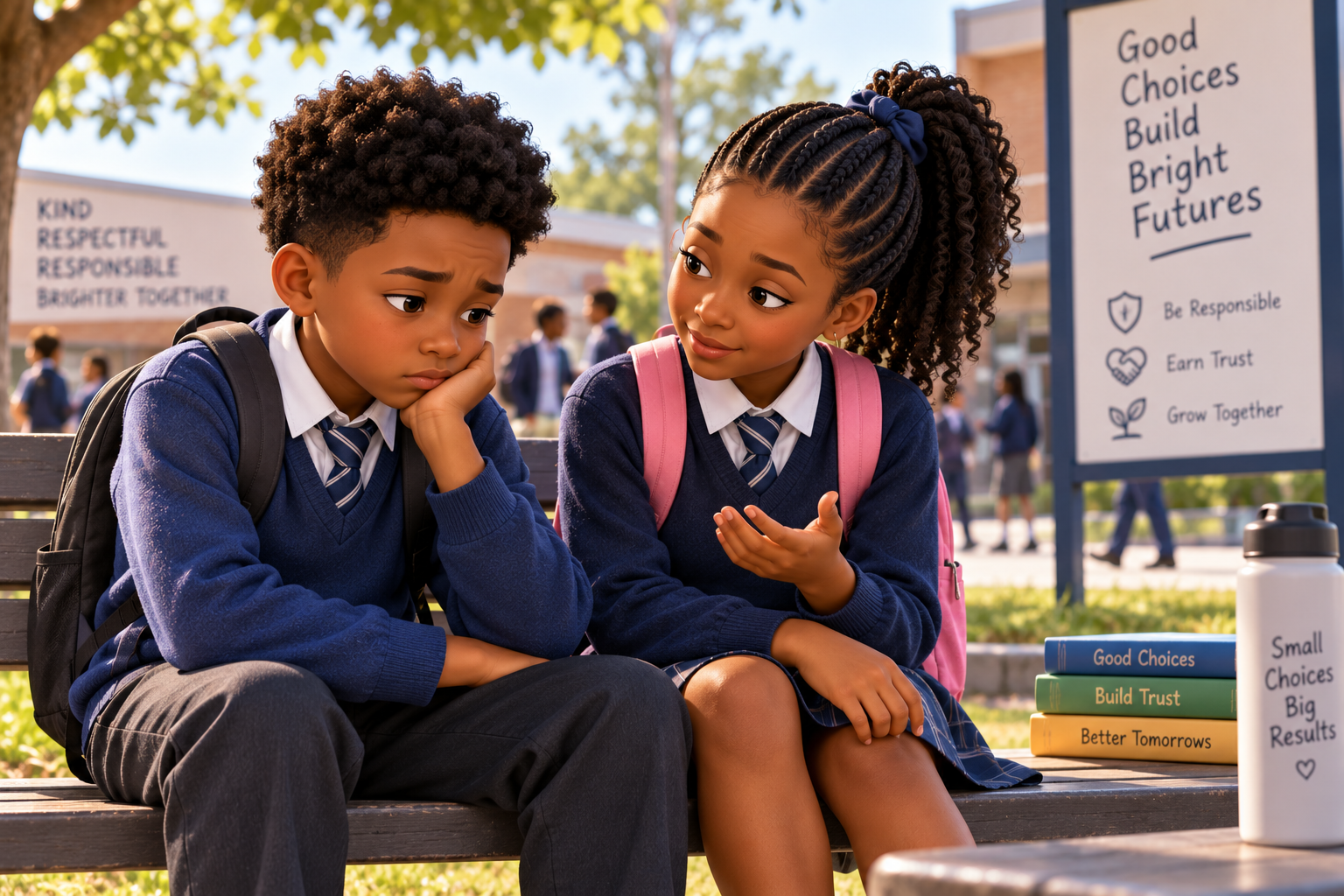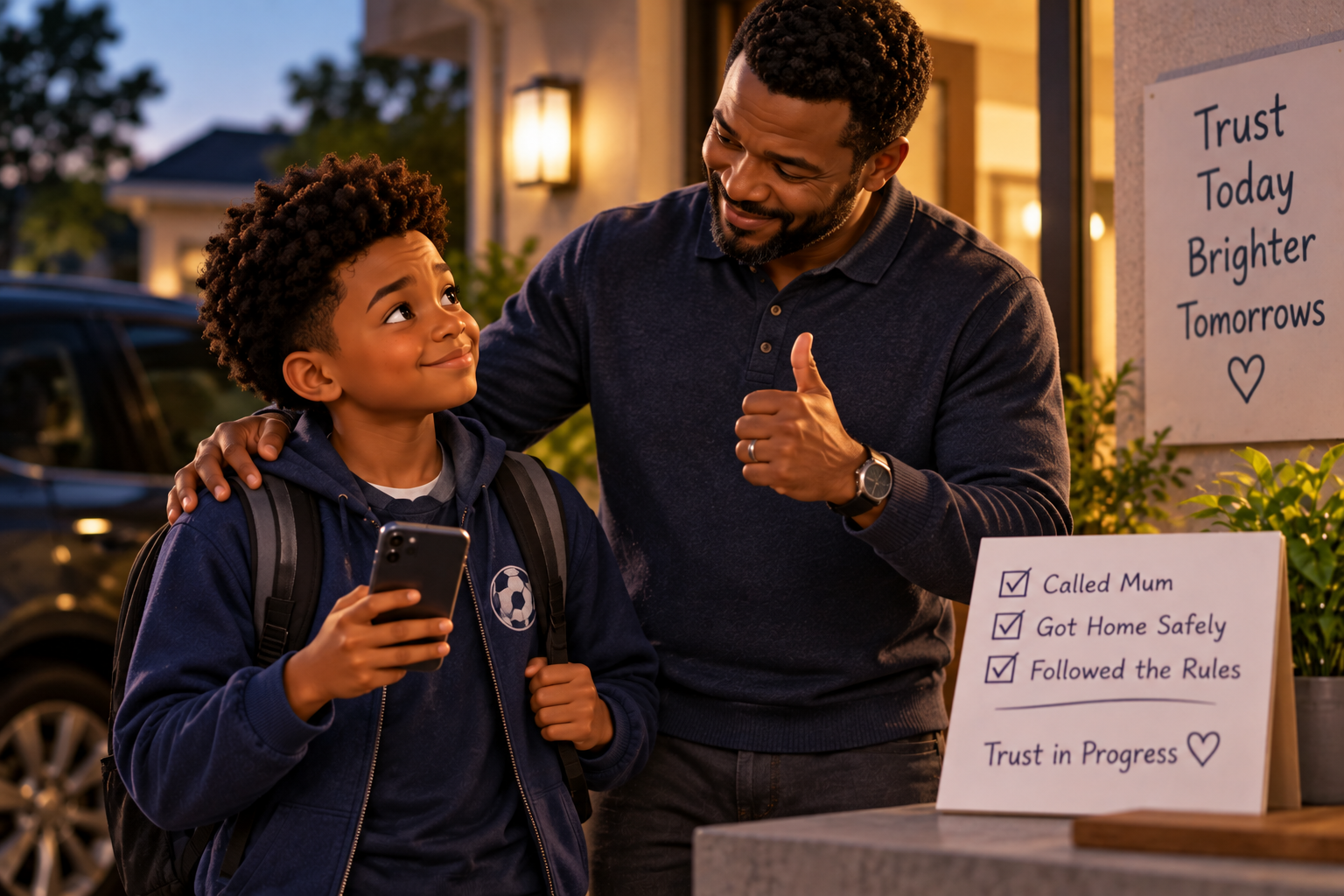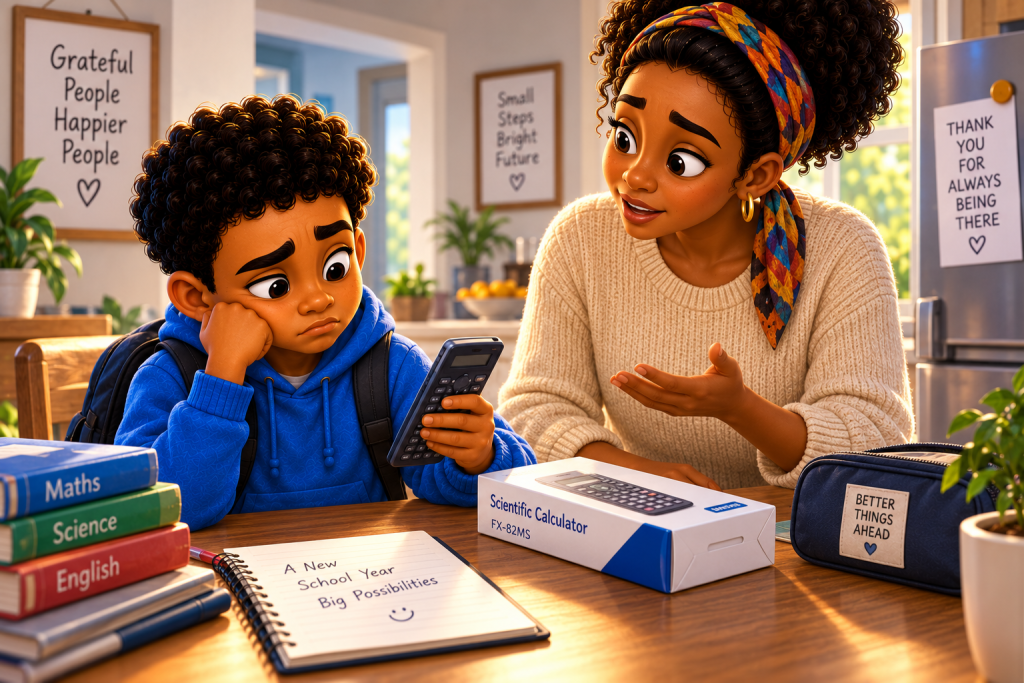
Leo and Maya: The Courage to Show Your Heart

A Children’s Story About Vulnerability, Safe Spaces, and Emotional Intelligence

Leo and Maya had learned many things together. Self-respect. Gratitude. Attitude. But there was one lesson that felt scarier than all of them.

Vulnerability.

Leo had been acting strange all week. He was quiet. He snapped at his little sister. He looked disorganised and even went to school forgetting the print out of his completed assignment and didn’t comb his hair.

Maya noticed everything.

“Leo,” she said softly. She had noticed Leo sitting quietly at a corner in a very noisy assembly hall. Leo would usually be part of the noise makers, but not today. “What’s going on?” she asked.

“Firstly Leo, your hair looks rough,” she said gently. “And then you don’t appear to have a print out of your assignment with you.”

“Nothing,” Leo mumbled. “I’m fine.”

But he wasn’t fine. His eyes were red. His shoulders were slumped and of course his hair looked coarse, dry and frizzy!

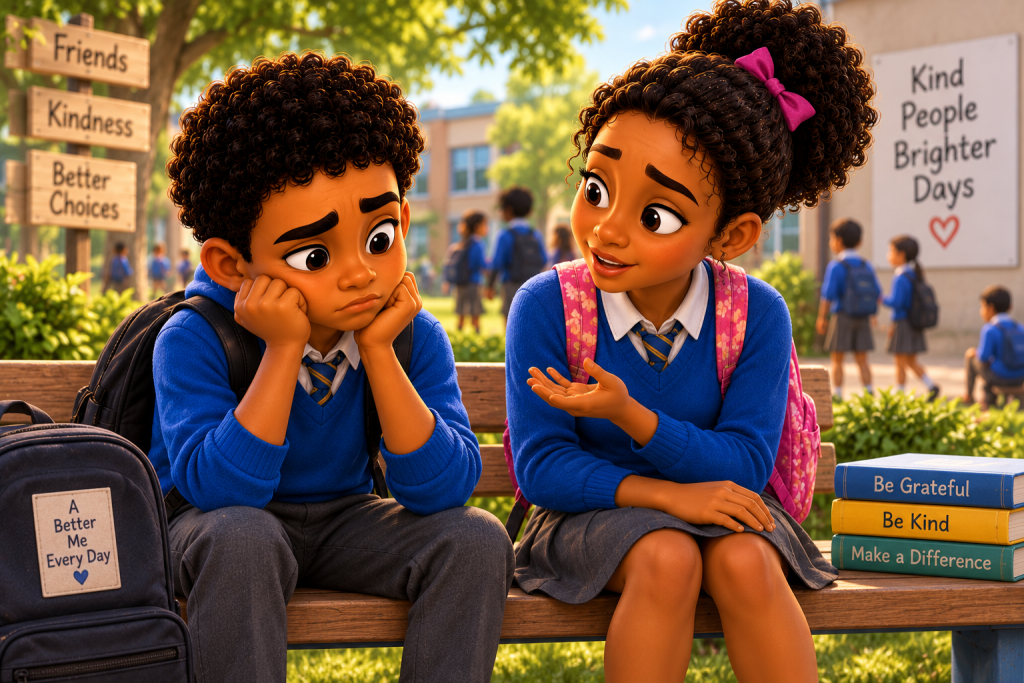
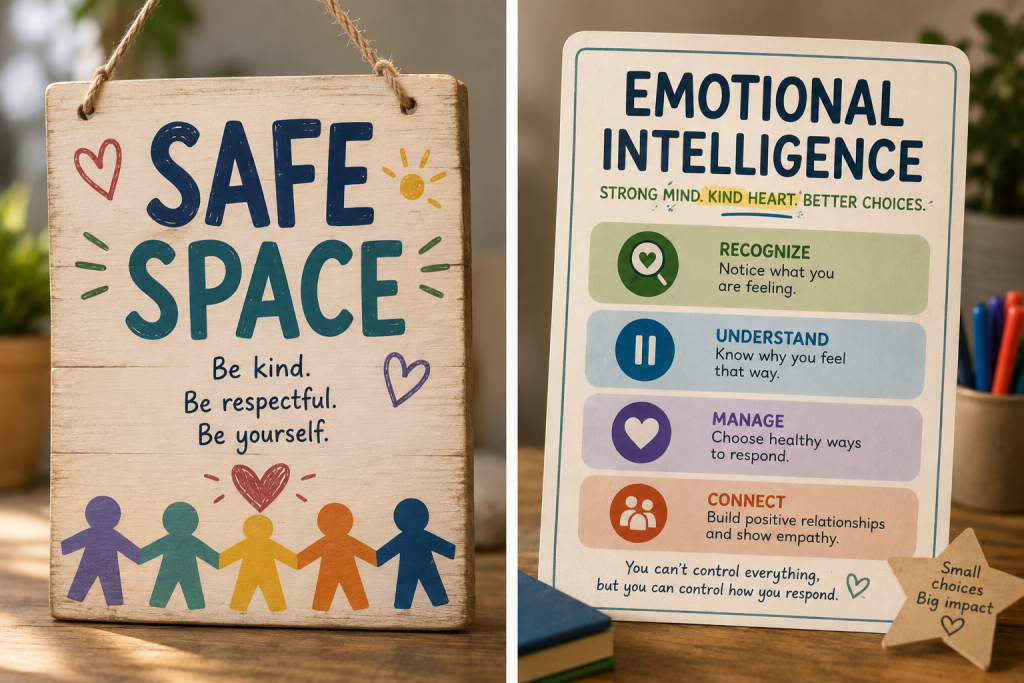
Maya sat beside him. “You don’t have to tell me. But I’m here. And whatever it is, I won’t laugh. I won’t tell anyone. This is a safe space.”

Leo looked at her. His lip trembled.

“My dad bought a business,” Leo said quietly. “It’s three hours away. He has to travel there every week. He’s exhausted. He’s stressed. And now he’s talking about moving us closer to the business.”

Maya’s eyes widened. “Moving? Away from here?”

Leo nodded. Tears spilled down his cheeks. “I don’t want to leave. I don’t want to leave this school, I don’t want to leave my football team. But Dad says the long travel is making him tired and stressed. He thinks it’s affecting everything—even my attitude at home, at school and at football.”

Maya didn’t say, “It’ll be okay.” She didn’t try to fix it. She just sat with him and let him cry.

“Thank you for telling me,” Maya said gently. “That took courage. Being vulnerable means sharing your feelings even when you’re scared. You trusted me with something real.”

Leo wiped his eyes. “It feels lighter. Like I was carrying a heavy rock and I put it down.”

“That’s what vulnerability does,” Maya said. “It shares the weight.”

Later that day, Leo’s teacher, Mrs. Patel, noticed he seemed distracted.

“Leo, is everything alright? You look unusually rough and upset.”

Leo hesitated. Mrs. Patel was kind. She always listened. But the classroom was full of other students. Everyone could hear.

“I’m just worried about something,” Leo said quietly. “My dad bought a business far away. He’s always travelling. Now he wants to move us closer.”

Mrs. Patel’s face softened. “Thank you for sharing, Leo. That must be very stressful.”

But before Leo could say anything else, some boys at the back started whispering.

“Moving?” one of them snickered. “Where to? Some tiny village school?”

“Yeah,” another boy laughed. “Probably no football team there. Or maybe they play on a muddy field with cows.”

Leo’s face burned. His stomach twisted. He hadn’t meant for everyone to hear. He had just answered Mrs. Patel honestly.

“Shut up!” Leo snapped, his voice shaking. “You don’t know anything!”

The boys laughed louder. “Scared of cows, Leo?”

Leo became even more upset despite Mrs. Patel trying to calm the situation down. “Keep quiet everyone. Be kind to Leo,” she said.

Maya found him sitting quietly at the canteen. His face was wet with tears and anger.

“Leo! What happened?”

“I told Mrs. Patel about the move,” Leo said, his voice cracking. “And everyone heard. Those boys—they mocked me. They said I’d go to some rubbish school with cows.”

Maya’s expression turned serious. “Leo, that wasn’t a safe space. The classroom is public. Anyone can hear.

Being vulnerable is brave—but you have to choose the right time, the right place, and the right people.”

Leo wiped his eyes. “I thought Mrs. Patel was safe.”

“She is,” Maya said. “But the classroom isn’t. She couldn’t control what the other kids heard or said. That’s not her fault. But it’s a lesson for you. Save your big feelings for private spaces—with trusted people.”

Leo nodded slowly. “So vulnerability is good, but not with everyone, everywhere?”

“Exactly,” Maya said. “Safe spaces are with people who have earned your trust. Not with strangers. Not in front of a whole class. And definitely not online.”

Maya pulled out her tablet. “Speaking of online—look at this.”

She showed Leo a pop-up ad: “FREE ROBUX! CLICK HERE!”

“See this?” Maya said. “This is a trap. If you click it, they ask for your name, your school, your password. They use your trust to steal from you. That’s vulnerability in a dangerous way.”

Leo nodded. “So being vulnerable online is bad?”

“Not always,” Maya said. “But you have to be smart. Never share personal information. Never click unknown links. Never tell strangers your feelings or secrets. That’s not a safe space—that’s a danger zone.”

That evening, Leo sat down with his dad.

“Dad, I need to talk to you. For real.”

His dad put down his laptop. “Of course, son. What’s on your mind?”

Leo took a deep breath. “I’m scared about moving. I don’t want to leave my school. I don’t want to leave my team. But I also see how tired you are. I know the travel is hard. I know it’s affecting everything.”

His dad’s eyes softened. “Leo, my preferred option is to remain here to keep you at your school and your team but your attitude and standards needs to improve. It causes your mum and I additional stress.”

“I understand daddy,” Leo admitted. “But I want to be honest. I want to find a way through this together. Maybe we don’t have to move. Maybe there’s another solution.”

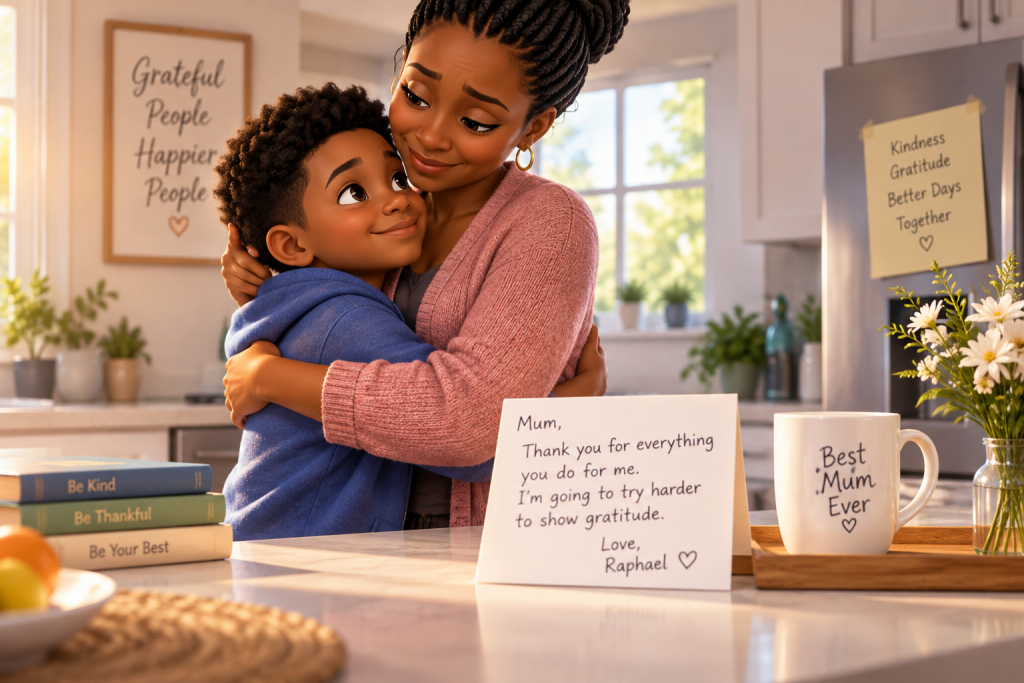
His dad pulled him into a hug. “Thank you for telling me, son. That took real courage. Let’s figure this out together.”

The next week, Leo’s dad found a solution. He hired a manager to run the business three days a week. He reduced his travel to just one day. No more relocation. No more moving.

Leo felt like the world had lifted off his shoulders.

He found Maya at the playground.

“I want to thank you,” Leo said. “You were my safe space. You didn’t judge me. You didn’t tell anyone. You just listened. And you taught me when NOT to share.”

Maya smiled. “That’s what friends do.”

“I also learned something else,” Leo said. “Being vulnerable with everyone is dangerous. Those boys used my feelings to hurt me. I have to choose wisely. Safe people. Safe places.”

Maya nodded. “Vulnerability is a superpower—but like all superpowers, you have to use it responsibly. Share your heart with safe people. Protect it from unsafe ones. And never let anyone make you feel bad for having feelings.”

Leo grinned. “Can I be vulnerable with you again?”

“Always,” Maya said. “That’s what safe spaces are for.”

The next day at school, one of the boys who had mocked Leo came up to him.

“Hey, sorry about the cow joke,” the boy mumbled. “That was mean.”

Leo looked at him. He remembered how it felt to be mocked. He also remembered that vulnerability is a gift you choose to give—not everyone deserves it.

“Thank you for apologising,” Leo said carefully. “But next time, think before you speak. You don’t know what someone else is going through.”

The boy nodded and walked away.

Maya appeared beside Leo. “That was mature. How did you stay so calm?”

Leo smiled. “Because I learned something. My feelings are precious. I only share them with people who have earned the right to hear them. Everyone else just sees my smile.”

Maya high-fived him. “That’s emotional intelligence. And vulnerability. Together.”

LessonWhat it Means
Safe spacesShare your feelings with people who have earned your trust
Telling the truthHonesty with safe people lightens heavy feelings
TransparencyBeing open helps others understand and support you
When NOT to shareAvoid sharing big feelings in public spaces or with strangers
Online safetyNever share personal information or click unknown links
Protecting yourselfChoose wisely who gets to hear your heart

Leo and Maya: The Attitude Altitude

Leo and Maya had learned a lot together. Self-respect. Gratitude. Consistency. But there was one lesson Leo hadn’t quite mastered yet.

His attitude.

Maya was buzzing with excitement. She had just passed her Grade 1 piano exam with flying colours.

“I did it, Leo!” she said, waving her certificate. “All those weeks of practice paid off!”

“That’s great,” Leo said flatly. He didn’t sound great.

Maya noticed. “What’s wrong?”

Leo kicked a stone. “The coaches said I can’t move up to the elite football squad.”

Maya’s face fell. “But you’re the fastest player! Why not?”

Leo’s voice got louder. “They said my ‘attitude needs work.’ That I don’t ‘receive feedback positively.'”

He mimicked the coach’s voice angrily. “Every time they tell me to do something, I tell them why they’re wrong!”

Maya winced. “Leo, that doesn’t sound like you.”

“That is me!” Leo shouted. “They just don’t get it!”

Maya didn’t react. She just waited.

Later that week, Leo’s teacher handed back his maths test. A big red “C” was scrawled at the top.

“Leo,” the teacher said gently, “you’re capable of so much more. But you rush through your work. When I give you feedback, you argue instead of listening.”

Leo grabbed his test and shoved it in his bag. “This test was too hard!” he muttered.

At home, his mum found him slumped on his bed.

“Leo, what happened?”

“Nothing mum. I am tired.”
“Well” mum says, “that’s why you need to go to bed early and stop trying looking for the smart phone or iPad after bed time”

His mum sat beside him. “I know you are a good kid. I also know you’re upset. But sweetheart, your attitude is holding you back. At football. At school. You have so much potential—but potential without a good attitude goes nowhere.”

Leo looked at his football medal on the shelf. He used to be so proud of it. Now it just made him sad.

The next day, Maya found Leo sitting alone at lunch.

“I’m sorry,” he said quietly. “I’ve been horrible lately.”

Maya nodded. “You have been a bit grumpy.”

Leo almost laughed. “My coach said I can’t move up because I don’t take feedback. My teacher gave me a C because I argue instead of listen. Even my mum said my attitude is holding me back.”

Maya thought for a moment. “Do you remember when I practised piano every day?”

“Of course. You were so consistent.”

“My teacher gave me feedback all the time. ‘Your fingers are too flat. Your timing is off. Play it again, slower.'”

Leo nodded. “That sounds annoying.”

“It was,” Maya admitted. “But I listened. Because I wanted to get better. If I got angry every time she corrected me, my mum would have stopped the lessons.

Leo stared at his sandwich. “So you’re saying I should just… accept being told I’m wrong?”

“I’m saying feedback isn’t an attack,” Maya said. “It’s a gift. Someone took time to help you improve. When you argue, you throw that gift away.”

That afternoon, Leo walked to football practice with a different mindset.

Coach called him over. “Leo, your footwork is sloppy on the left side. You need to practise your weaker foot.”

Leo opened his mouth to argue. My left foot is fine!

But he stopped himself. He took a deep breath.

“Okay, Coach,” he said. “Can you show me what I’m doing wrong?”

Coach’s eyebrows shot up in surprise. Then he smiled. “Gladly.”

For the first time, Leo actually listened. He didn’t interrupt. He didn’t roll his eyes. He did exactly what Coach said.

After practice, Coach pulled him aside. “That was much better. You know, the elite squad isn’t just about skill. It’s about attitude. Players who can learn, grow, and take feedback. Keep this up, and we’ll talk.”

Leo’s heart jumped. “Really?”

“Really.”

At school, Leo tried the same thing. When his teacher gave him feedback on his essay, he didn’t argue.

“I see what you mean,” he said. “Can I rewrite it and show you tomorrow?”

The teacher looked pleasantly surprised. “Of course, Leo. That’s a great attitude.”

That night, Leo didn’t rush through his homework. He took his time. He checked his answers. He even asked Maya to quiz him on spellings.

“I can’t believe this is the same Leo,” Maya joked.

Leo grinned. “I can. I just had to stop being angry at everyone who was trying to help me.”

Three month later, Leo’s teacher handed back his recent maths test. A big red “A” was at the top.

“Leo, this is wonderful progress. Your attitude shift has made all the difference.”

Leo smiled. “Thank you. I listened this time.”

At football, Coach gathered the team. “Leo, you’ve shown real improvement. Not just in your skills—in your attitude. You’re ready for the elite squad.”

Leo felt like he could fly.

After practice, he and Maya walked home together.

“Your attitude determines your altitude,” Maya said. “You can’t go higher than your head is willing to go.”

Leo nodded. “I thought the coaches and teachers were against me. But they were actually trying to lift me up. I just had to let them.”

Maya smiled. “And now look at you. Elite squad. Top grades. Same Leo—but better.”

Leo laughed. “Same Maya—always right.”

They high-fived.

“To better attitudes,” Leo said.

“To higher altitudes,” Maya replied.

Leo and Maya: The Respect Within (self-respect)

Leo and Maya were best friends. They did everything together: football, homework, and sharing snacks at break. But lately, Leo had noticed something different about himself.

He was leaving his dirty dishes in the sink,
His mum had to call him three times to get out of bed. He rushed to school with his shirt untucked and his hair sticking up. His homework was done—but only after his mum asked. His room looked like a tornado had visited.

“I’ll do it later,” Leo always said.

But “later” never came.

One morning, Maya noticed Leo’s shoelaces were untied, his hair not combed, and his collar was crooked. She gently pointed at her own neat uniform.

“Leo,” she said softly, “when you show up messy, people notice. Not to be mean—but they address you the way they perceive you.

Leo frowned. “I was in a rush plus I misplaced my comb.”

“Every day?” Maya asked.

Leo didn’t have an answer.

One morning at school, a group of cool older kids approached Leo. They had something in their hands—shiny stickers, extra snack bars, and a fancy pen.

“Here,” said the oldest boy, pushing a sticker into Leo’s hand. “You can have this. Just hang with us at lunch.”

Leo was thrilled. Free stuff! He pocketed the sticker.

Then the group started making fun of a quiet boy in the corner. “Look at his shoes,” one girl whispered. “So last year.”

They laughed. Leo’s stomach twisted.

“Your friend Maya is always helping everyone,” another boy said. “So desperate for attention.”

Leo opened his mouth to laugh along. But nothing came out.

Later, Maya found Leo sitting alone on the bench. “What’s wrong?”

Leo pulled out the sticker. “They gave me this. But they wanted me to laugh at people. At you.”

Maya sat down. “Did you laugh?”

“No,” Leo said quietly. “But I wanted to fit in. I wanted the free stuff.”

Maya nodded. “Leo, do you know what self-respect is?”

“Kind of,” he said. “It’s like… being proud of yourself?”

“More than that,” Maya said. “Self-respect is treating yourself like someone who matters. That means doing your homework before your mum asks. Washing your own dish after dinner. Picking up your own mess. Because you deserve a tidy life.”

Leo blinked. “I’ve been leaving everything for later.”

“Exactly,” Maya said. “And when you don’t respect yourself, it’s easier to let other people disrespect you too. Those older kids weren’t being nice. They were buying your bad behaviour with stickers.”

That night, Leo couldn’t sleep. He thought about Maya’s words. He thought about the older kids. He thought about his messy room and his untucked shirt.He looked at his dirty plate in the sink. He looked at his homework on the table. He looked at his messy room.

Then he did something different.

He washed his plate. He dried it and put it away.

He sat down and finished his maths assignment without anyone telling him.

He picked up his clothes from the floor and put them in the basket.

When his mum walked in, her mouth dropped open. “Leo! Did you do all this yourself?”

Leo nodded. “I’m respecting myself now.”

His mum hugged him so tight. “I’m impressed.”

The next morning, something interesting happened

Leo woke up before his alarm. He showered without being told. He brushed his hair until it lay flat. He tucked his shirt in neatly. He tied his shoelaces tight. He packed his bag the night before—so nothing was forgotten.

At breakfast, he washed his bowl and put it in the rack. No one asked him to.

His mum walked into the kitchen and was even more impressed

His mum hugged him tight. “I’m so proud of you.”

At school, Maya noticed immediately. “Your uniform is perfect,” she said. “And you’re early!”

Leo grinned. “I set my alarm. I got ready without anyone telling me. It felt… good.”

“Because you’re treating yourself like someone who matters,” Maya said.

At lunch, the football club had a meeting. Leo had forgotten his short last week and looked scruffy with a different nike short on. But today, he had his clean, correct uniform—shirt, shorts, shin pads, and proper socks.

“Ready for practice!” he announced.

The coach smiled. “Now that’s what I call prepared.”

Then the older kids appeared again. They offered Leo a fancy chocolate bar. “Sit with us,” they said. “We’ll share.”

Leo looked at the chocolate. Then he looked at his neat uniform. At his clean hands. At his packed bag.

“I don’t need gifts to be your friend,” Leo said firmly.

The group stared. “What’s wrong with you?” one asked.

Leo stood taller. “Nothing. I just respect myself. And respecting myself means not laughing at people. Not letting anyone disrespect me. And not taking things that come with bad conditions.”

The group rolled their eyes and walked away.

Maya appeared beside him. “That was self-respect in action.”

“It felt weird,” Leo admitted. “But also… powerful?”

“Because you chose you,” Maya said. “Not the sticker. Not the chocolate. Not their approval. You chose yourself. And you showed up as your best self—early, neat, prepared. That way, nobody even had the chance to disrespect you.”

From that day on, Leo did things differently.

He woke up early every morning. He wore the right uniform to every club. He did his homework before his mum asked. He washed his own dishes. He tidied his room. He brushed his hair. He tied his shoes.

One afternoon, a new kid at school had his shirt untucked and his bag spilling open. The older kids started snickering.

Leo walked over. He knelt down and helped the new kid pack his bag properly.

“Here,” Leo said, tucking in the kid’s shirt gently. “You’ll feel better when you look after yourself. People treat you the way you treat you.”

The new kid smiled. “Thanks. I didn’t know how to fix it.”

Leo smiled back. “Now you do.”

Maya watched from across the playground. She didn’t say anything. She just nodded proudly.

At the end of the day, Leo and Maya walked home together.

“Self-respect isn’t about being perfect,” Leo said. “It’s about knowing I matter. Even when no one’s watching. It’s showing up early. Dressing right. Doing the small things—because I’m worth it.”

Maya grinned. “And when you respect yourself, others respect you too.”

They high-fived.

“To showing up,” Leo said.

“To your best self,” Maya replied.

Leo and Maya: Emotional Intelligence (The Red Zone Relay)

It was Sports Day at Leo and Maya’s school. The sun was shining. The parents were cheering. And Leo was determined to win the relay race.

He had practiced for weeks. He was fast. He was ready.

The race began. Leo’s team was in the lead. He grabbed the baton for the final stretch and ran like the wind. He could see the finish line. He could hear his mum shouting his name.

Then—thump.

Leo tripped over his own feet. He hit the grass hard. The baton flew out of his hand. Two other runners zoomed past him.

Leo’s team came in last.

He lay on the grass, breathing hard. His face burned. His eyes stung. He wanted to scream. He wanted to throw the baton. He wanted to disappear.

Maya ran over. She didn’t say, “It’s okay.” She didn’t say, “You tried your best.” She just sat down next to him on the grass and waited.

“I’m so mad,” Leo growled through clenched teeth.

“I know,” Maya said.

“I practiced so much. And I ruined everything.”

Maya nodded. “That’s the red zone, Leo. Your feelings are huge right now. Your brain is tiny.”

Leo kicked the grass. “I don’t want to breathe. I want to be angry.”

“Then be angry,” Maya said. “I’ll stay here. But when you’re ready, try this: breathe in for four, hold for four, out for four.”

Leo scowled. But he took one breath. Then another. Then three.

After a minute, his fists unclenched. His face stopped burning.

“I still feel bad,” he said quietly.

“Of course you do,” Maya said. “That’s allowed. Emotional intelligence doesn’t mean you stop feeling sad or angry. It means you notice it, you name it, and you don’t let it make you mean.”

Leo looked around. His teammates were slouching on the bench. One kid was crying. Another was blaming the wind.

“I should go say sorry to my team,” Leo said. “For falling.”

“That would be kind,” Maya said. “But you don’t have to be kind right now if you’re not ready. You can just sit here first.”

Leo shook his head. “No. I want to. I fell. But I can still cheer for them in the next race.”

He walked over to his teammates. “I messed up,” he said. “But you all ran so fast before that. I’m sorry.”

The crying kid looked up. “It’s okay. Tripping happens.”

They all high-fived. And when the next race started, Leo cheered loudest of all—even though he wasn’t running.

Afterward, Maya said, “You didn’t just feel your feelings. You used them to do something good. That’s emotional intelligence.”

Leo smiled. “I still wish I won.”

“Me too,” Maya said. “But I’m prouder of you for not staying angry.”

They walked to the ice cream cart together. Leo bought two cones—one for Maya and one for himself.

“To red zones,” he said, holding up his cone.

“To breathing through them,” Maya clinked back.

Leo and Maya: The Honest Choice

Leo and Maya had learned a lot together. They learned that a small parking spot could be leverage—a tiny thing that moves something big. They learned that five minutes of practice every day was consistency—small efforts that build real skill.

Continue reading

Leo and Maya: Unrealistic Expectations

Leo loved the idea of winning. He just didn’t love practicing.

On Monday, his teacher announced a big spelling test on Friday. Twenty words. “Start studying tonight,” she said.

Leo nodded. Then he went home and played video games.

On Tuesday, Maya called. “Want to quiz each other?”

“I already know the words,” Leo said. He hadn’t opened his notebook.

On Wednesday, Leo’s mom said, “Let’s practice spelling.” Leo said, “I’m a natural speller. It’s like a superpower.”

On Thursday night, Leo finally looked at the word list. His stomach dropped. Accommodation. Necessary. Separate. He couldn’t spell any of them.

“It’s fine,” he whispered to himself. “I’ll guess. Guessing works.”

Friday morning, the test came. Leo stared at the paper. His pencil didn’t move. He wrote acomidation and necesary and seprate. Every single one was wrong.

He got 2 out of 20. The worst in the class.

At recess, Leo sat alone on the bench. Maya sat beside him.

“I thought I’d just… be good at it,” Leo said. “Without doing anything.”

Maya nodded. “That’s called magic thinking. Magic isn’t real. Spelling is.”

Leo groaned. “And sports day is next week. I signed up for the sack race. I’ve never even been in a sack.”

“Then practice,” Maya said.

“It’s too late,” Leo said. “I expected to win without practicing. Same as the spelling test. I’m just… stupid.”

“No,” Maya said firmly. “You’re not stupid. You just had an unrealistic expectation. You expected your brain to know things you never put into it. That’s like expecting your backpack to have lunch even though you never packed it.”

Leo looked at his empty backpack. “So… I packed nothing. Then I got nothing.”

“Exactly,” Maya said. “But here’s the good news. Sports day is six days away. You can’t win the spelling test now. But you can practice the sack race.”

Leo spent every afternoon that week hopping in a sack in his backyard. He fell thirty-seven times. He got grass stains on his knees. But by Friday, he could hop straight and fast.

Sports day came. Leo didn’t win first place. He came in third. But when he crossed the finish line, he was grinning.

“I didn’t get magic,” he told Maya. “I got practice. And third place feels better than zero.”

Maya high-fived him. “Next spelling test, you’re packing your backpack early.”

Leo laughed. “Deal.”